Animation vs Live Action for Business
 by
by 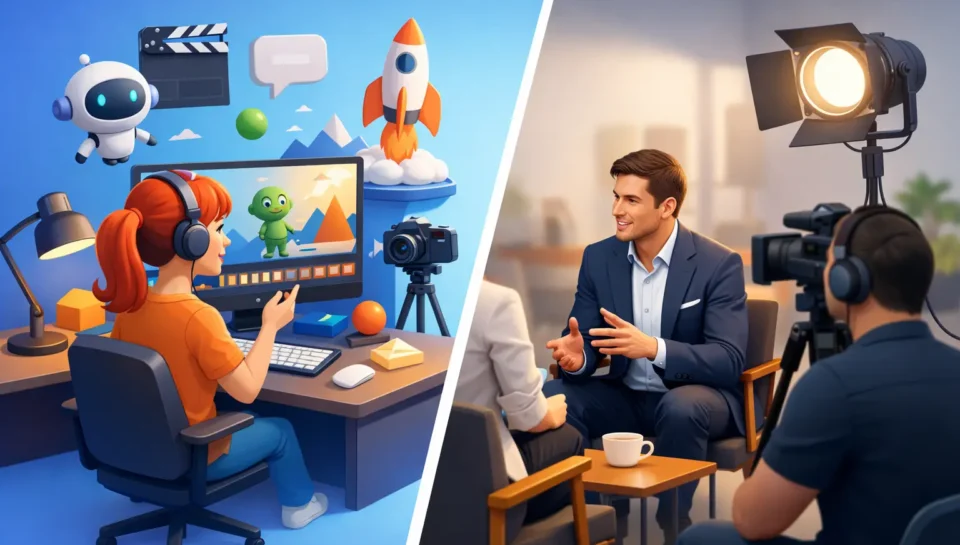
A polished live-action video can look brilliant – until you need to reshoot it, shorten it for Instagram, remove a staff member who has left, or explain something that simply cannot be filmed. That is where the real animation vs live action decision starts for most businesses. It is not about which format is more artistic. It is about what gets attention, explains your offer clearly, and keeps costs under control while you grow.
For small and mid-sized businesses, this matters more than ever. You need content that works across your website, social media, presentations, training, events and sales activity. You also need something practical. If every new campaign requires locations, cameras, scheduling and a bigger budget, video can quickly become more hassle than help.
Animation vs live action: what are you really choosing?
Most business owners think they are choosing between two visual styles. In reality, they are choosing between two production systems.
Live action depends on people, places, time slots, lighting, filming conditions and post-production. It can create trust quickly because viewers see real faces, real products and real environments. If you run a restaurant, a gym, a dental practice or a venue, showing the real space can be powerful. It proves you exist. It gives your brand a human feel.
Animation works differently. It is built rather than captured. That gives you control. You can shape every frame around the message, simplify complicated ideas, stick to brand colours, and adapt the content later without starting from scratch. If you are selling a service, software, training, consultancy, finance, healthcare support or anything else that is hard to film in an exciting way, animation often does the job faster and better.
That is why this is rarely a simple creative preference. It is a commercial choice.
Where live action wins
Live action is strongest when the real-world setting is part of the sale. If your premises, team, atmosphere or physical product are key trust signals, filmed content can help people feel closer to the business before they ever make contact.
A trades company can use live action to show workmanship. A care provider can show warmth and professionalism. A school or training provider can show real people in real spaces. When credibility depends on being seen, live action has an obvious advantage.
There is also emotional value in a real person speaking to camera. Founder stories, client testimonials and behind-the-scenes footage can feel immediate and honest. Used well, this can build confidence quickly.
But there is a catch. Authenticity is not automatic. Poor lighting, weak scripting, stiff delivery or rushed editing can make live action feel cheaper than it should. Many businesses assume filming is the more premium route, then end up with content that looks inconsistent across platforms or dates badly within months.
Where animation wins
Animation is often the smarter choice when the goal is clarity, speed and flexibility. It is especially effective for businesses that need to explain, persuade or educate.
An animated advert can introduce a service in 30 seconds without relying on actors, locations or a perfect filming day. A motion graphic can turn dry statistics into something people actually watch. A training video can stay on-brand and easy to update. A conference opener can look high-impact without the cost of a large-scale shoot.
This matters because most businesses are not creating video for cinema screens. They are creating it for busy people scrolling on phones, clicking through websites and sitting through sales presentations. In those settings, clean visual communication wins.
Animation also gives you consistency. Your logo, colours, messaging and tone can stay aligned across every asset. That helps with recognition, which helps with trust, which helps with conversion. If you are serious about visibility, that consistency is not a nice extra. It is part of the strategy.
Cost is not as simple as people think
One of the biggest myths in animation vs live action is that animation is always the expensive option. For Hollywood, perhaps. For business marketing, not necessarily.
Live action can look affordable at first because people think in terms of one camera and one day of filming. The hidden costs arrive later. Planning, travel, crew, retakes, editing, voiceover, talent, location issues and revisions all add up. Then, if your offer changes, you may need to film again.
Animation is usually more predictable. Once the concept, script and style are approved, production becomes far easier to manage. There are fewer moving parts and fewer surprises. Revisions are also less painful. Need to update a price, statistic, headline or call to action? In many cases, that is a design adjustment, not a reshoot.
For businesses watching spend closely, that makes a big difference. You are not just buying one piece of content. You are buying a format that can keep working as your marketing evolves.
Speed, scale and repurposing
This is where animation pulls ahead for many brands.
A good marketing asset should not live in one place. You may need a full version for your website, shorter cuts for social media, silent versions for paid adverts, looped visuals for events, and internal edits for presentations or staff training. Animation is built for this kind of repurposing.
Live action can be repurposed too, of course, but it is less forgiving. If the footage was shot in landscape and you need vertical content later, compromises appear. If the original script was too broad, cutting it down can leave gaps. If key visuals were missed on the day, there is no easy fix.
Animation starts with adaptability in mind. That is a serious advantage for smaller businesses trying to get maximum value from every project.
Which format performs better?
There is no honest way to say one always outperforms the other. It depends on the audience, platform, message and stage of the customer journey.
If you are introducing your team, proving your premises are professional, or building local trust, live action can perform well because it feels personal. If you are explaining a process, launching a service, promoting an event, or making social content that needs to stop the scroll quickly, animation often has the edge.
Performance also depends on execution. A badly planned animated video will not save a weak offer. A slow, self-indulgent live-action film will not generate leads just because it features real people.
The strongest businesses stop asking which format is better in general and start asking which format is better for this campaign, this audience and this platform.
The smartest answer is often both
Here is the part many agencies skip. It does not always have to be one or the other.
Some of the strongest commercial content combines live action with animated elements. You might film your team or location, then add animated titles, branded overlays, captions, icons or motion graphics to sharpen the message. This keeps the human side of the brand while making the content more polished and easier to understand.
That hybrid approach works particularly well for service businesses, educational organisations, healthcare providers and companies with complex offers. It gives you trust and clarity in the same asset.
If you have a limited budget, the better question may be where each format does the most work. Use live action where reality sells. Use animation where explanation, consistency and flexibility matter more.
How to choose without wasting budget
Start with the message, not the medium. What are you trying to get someone to do? Book a call? Understand a service? Attend an event? Buy a product? If that action depends on seeing the real thing, live action may be the better fit. If that action depends on making the message simple, memorable and adaptable, animation is likely stronger.
Then consider lifespan. Will this content still be accurate in six months? In a year? If regular updates are likely, animation gives you more room to move.
Finally, think about your internal capacity. Many businesses do not have time to coordinate complex filming days. They need a smoother production process and assets that can be rolled out across multiple channels. That is exactly why agencies such as Visibility Consulting UK put animation at the centre of practical growth-focused marketing.
The right video format is the one that helps your business get seen, understood and remembered without turning production into a drain on time and money. If your content needs to work harder, last longer and adapt faster, animation deserves serious attention. If your audience needs to see the real people and place behind the brand, live action still has a role. The best choice is the one that moves your business forward, not the one that simply looks impressive on paper.