Motion Graphics vs Graphic Design Explained
 by
by 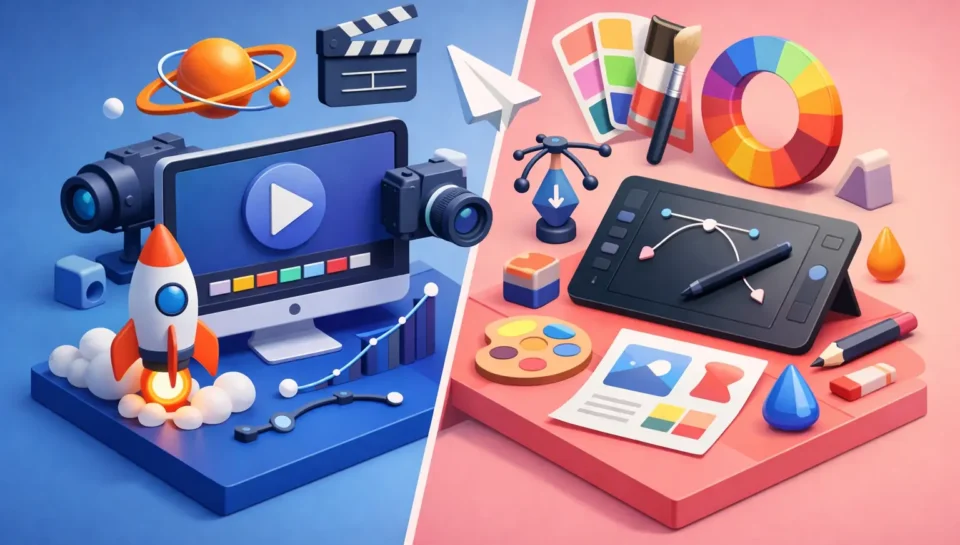
A static post can look sharp and still be ignored. A moving visual can grab attention in seconds and still fail if the message is weak. That is why the motion graphics vs graphic design debate matters for businesses that want results, not just nice-looking content.
If you are trying to get noticed online, explain a service, promote an event, train staff, or sharpen your brand presence, choosing the right format affects reach, engagement and conversion. The wrong choice wastes budget. The right one makes your marketing work harder.
Motion graphics vs graphic design: what is the actual difference?
Graphic design is the creation of visual communication in a static format. Think logos, brochures, posters, social posts, presentation slides, leaflets, packaging, infographics and brand assets. It uses layout, typography, colour, imagery and hierarchy to communicate clearly without movement.
Motion graphics takes those design principles and puts them into motion. It uses animation, timing, transitions, sound and sequencing to guide attention and explain ideas over time. Think animated adverts, social reels, explainer videos, title sequences, moving presentation visuals, product promos and training clips.
So the shortest answer is simple. Graphic design is still. Motion graphics moves.
But for a business owner, that is only half the story. The real question is not what they are. It is what they do.
Graphic design helps you look professional, consistent and credible. Motion graphics helps you stop the scroll, hold attention and push a message forward with more energy. One builds the visual foundation. The other adds momentum.
Why businesses often confuse them
The confusion usually comes from the fact that both use similar visual ingredients. The same brand colours, fonts, icons, illustrations and messaging can appear in both. A designer may create the static assets. A motion designer may animate them. To the client, it can look like one discipline with two outputs.
It is not quite that tidy.
A strong static design does not automatically become a strong animation. Once movement is involved, pacing matters. Story flow matters. Timing matters. What appears first, what fades in, what gets emphasis, and what the viewer notices in the first three seconds all become critical.
That is why businesses often commission motion content thinking it is simply graphic design with a few effects added. Then they wonder why the result feels busy, slow, confusing or forgettable. Animation is not decoration. It is communication with timing.
Where graphic design does the heavy lifting
Graphic design is still one of the most valuable investments a business can make. If your brand identity is weak, inconsistent or amateur-looking, no amount of animation will save it.
Static design is often the best choice when your audience needs to absorb information at their own pace. A brochure, event banner, menu, PDF guide, social tile or price sheet works because people can scan, pause and return to it. There is no fixed timeline. The viewer controls the experience.
It is also cost-effective for everyday visibility. You may need a steady run of branded social content, sales materials, pitch decks or internal documents. In those cases, graphic design gives you versatility and repeat use without the production layers that animation requires.
For many small firms, this is where the work should start. Nail the branding. Tighten the message. Make your business look trustworthy and clear. Then build outward.
Where motion graphics pulls ahead
When attention is short and competition is loud, movement gives you an edge. Motion graphics is especially powerful when you need to explain, demonstrate, persuade or energise.
A service business can use motion graphics to turn a dull process into a quick visual story. A healthcare provider can simplify a patient journey. A training team can show steps rather than dumping text onto slides. A local brand can transform a static offer into a social advert with pace, personality and stronger recall.
This is where animation becomes a growth tool, not just a creative add-on.
People are more likely to notice movement in crowded feeds. They are more likely to understand a process when it is broken into animated stages. They are more likely to stay engaged when visuals evolve rather than sit still. That does not mean every message needs animation. It means high-value messages often benefit from it.
If you need to launch a product, promote a service, introduce a brand, support a keynote, drive clicks, or make internal communications less forgettable, motion graphics usually does more commercial work per second.
Motion graphics vs graphic design for marketing ROI
This is the part most agencies skip or blur. The better format depends on the job.
If you need brand consistency across print, web and everyday sales materials, graphic design delivers excellent value. It creates the assets your business uses constantly. The return comes from professionalism, trust and usability.
If you need attention, retention and action in fast-moving digital spaces, motion graphics often offers stronger upside. The return comes from better stopping power, clearer communication and more engaging delivery.
There is also a practical middle ground. Not every campaign needs a fully produced live-action advert. That is where motion graphics becomes especially attractive for smaller businesses. It can produce high-impact visual marketing without the cost, logistics and disruption of full video shoots.
For many organisations, that is the sweet spot. More dynamic than static design. More affordable and flexible than traditional video production.
When graphic design is the smarter choice
There are times when static wins, and it is worth being honest about them.
If your message is simple and immediate, motion can be unnecessary. A clean event poster or offer graphic may do the job faster. If your audience needs to compare details, read carefully or refer back to the content, static design is often more practical. If the budget is limited and you need a larger volume of assets, graphic design may stretch further.
Static design is also stronger when the environment itself is static. Signage, print materials, branded documents and many website elements need clarity first, not movement.
The mistake is not choosing graphic design. The mistake is expecting static visuals to carry campaigns that really need energy, sequencing and narrative.
When motion graphics is worth the extra investment
Motion graphics earns its keep when the message has friction. If something needs explanation, a bit of persuasion, or a stronger emotional punch, movement helps.
That might mean a social advert for a limited-time promotion. It might mean an animated explainer on your homepage. It might mean branded title visuals for an event, onboarding content for staff, or a slick video to support sales presentations.
The extra investment pays off when the content has multiple uses too. One animated asset can often be adapted for your website, LinkedIn, Instagram, exhibitions, presentations and email campaigns. Suddenly, the cost is not tied to one post. It supports your wider visibility.
This is where strategy matters. The goal is not to animate everything. The goal is to animate the content that has the highest commercial value.
The strongest brands use both
The real answer to motion graphics vs graphic design is not always either-or. The strongest marketing systems use both, each for the role it performs best.
Graphic design creates the brand structure. Motion graphics brings that structure to life.
Your logo, font choices, colours, icon set and layout style need to be solid before they move. Once they are, motion graphics can turn them into social campaigns, promo videos, event visuals, training content and conversion-focused creative that feels joined up rather than improvised.
This is where businesses get a better return. Instead of commissioning random one-off assets, they build a visual system that works across static and animated formats. That makes every piece of content look more professional and every campaign easier to scale.
Visibility Consulting UK works with businesses in exactly this space – not just making content look good, but making sure it is fit for purpose, placed properly and built to get attention.
How to decide what your business needs first
Start with the outcome, not the format.
If your business looks inconsistent, outdated or unclear, begin with graphic design. Fix the brand basics. Tighten the visuals people see every day. Get your social assets, documents and sales materials working properly.
If your brand already looks solid but your marketing is struggling to grab attention or explain value quickly, motion graphics is likely the next smart move. It can sharpen your message and make your content harder to ignore.
If you are launching something new, promoting across multiple channels, or trying to stand out in a crowded market, the best answer may be a combination. Static assets for consistency. Animated content for reach and engagement.
That is the practical way to look at it. Not as an abstract creative debate, but as a business decision tied to visibility, response and growth.
A polished design can make your business look established. A well-planned motion piece can make people stop, watch and act. If your marketing needs more than decoration, choose the format that moves the result forward.