Animated Social Posts for Events That Fill Seats
 by
by 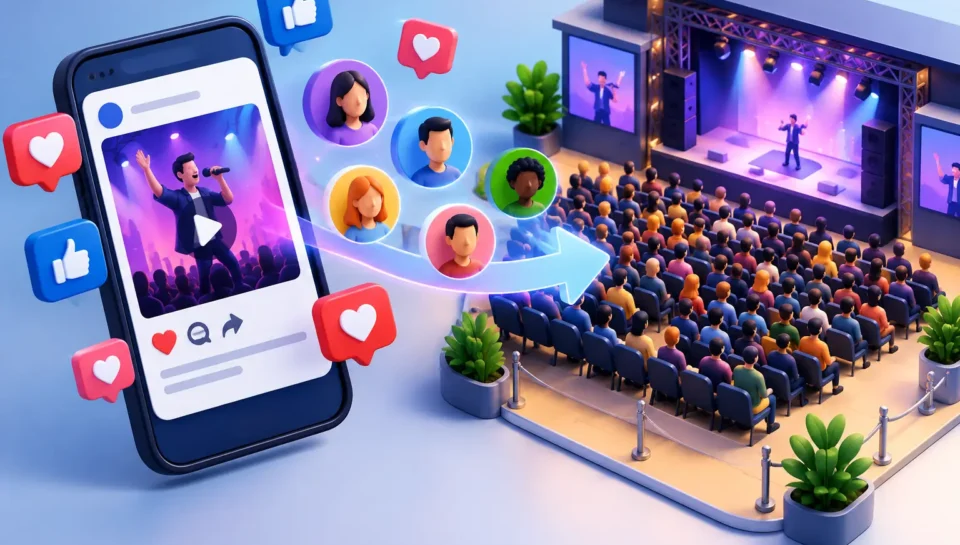
A static event graphic can announce a date. It rarely creates the urgency that gets someone to stop scrolling, click through and book. Animated social posts for events give your campaign movement, pace and personality – turning a poster-style announcement into content that earns attention before your event even begins.
For a local business, charity, venue, school, healthcare provider or growing service brand, that matters. You may have one opportunity to fill a room, sell tickets, secure registrations or get the right people through the door. Posting the same flyer repeatedly is not a strategy. It is background noise.
Why events need movement, not more posters
Social feeds are crowded with promotions, updates and distractions. Your event is competing with all of them, often on a small mobile screen while your audience is doing something else. Motion creates a break in that pattern. A moving headline, countdown, animated speaker reveal or quick transformation graphic gives people a reason to pause.
The advantage is not animation for animation’s sake. It is clarity delivered quickly. In a few seconds, an effective post can show what the event is, who it is for, when it happens and why it deserves time in someone’s diary. Add a clear call to action and the post has a job to do, not just a space to fill.
This is especially valuable when your offer needs explaining. A business networking morning, training session, open day or fundraising evening can sound ordinary in text alone. Animation lets you build momentum around the outcome: meet local decision-makers, gain a useful skill, see the new space, support a cause, hear an expert speak. People buy the benefit before they commit to the date.
What high-performing animated social posts for events do
The strongest event content does not try to say everything at once. It leads with one compelling message, then makes the next action obvious. That could be booking a ticket, reserving a free place, registering interest or sharing the post with a colleague.
A well-planned animated post can introduce an event with bold typography and brand colours, reveal the headline speaker, show a simple agenda, highlight limited spaces or count down to the day itself. It can also use real photographs, supplied footage, illustrations, icons or AI-enhanced visuals where appropriate. The format should suit the event and the audience, not follow a fashionable template.
A professional audience may respond best to clean motion graphics, proof points and a direct invitation. A family-focused event can carry more colour, warmth and energy. For a conference, animated social content can create a premium feel without the cost and disruption of a full-scale video shoot. It depends on the message, the event format and the platform where people will see it.
The common thread is simple: every frame must earn its place. If the first two seconds do not make the viewer curious, the rest of the animation may never be watched.
Build a campaign, not a single announcement
One launch post is useful. A sequence of posts is what builds recognition and action. Events are time-sensitive, so your creative needs to change as the date gets closer. Repetition helps, but repeated content must have a fresh reason to be seen.
A practical campaign usually includes four stages:
- The save-the-date post creates early awareness with the event name, date and core promise.
- The reason-to-attend post focuses on the outcome, such as expert advice, new contacts, practical demonstrations or a memorable night out.
- The proof post introduces speakers, partners, exhibitors, testimonials or highlights from previous events.
- The final-call post creates urgency with a deadline, limited availability or a clear reminder that booking closes soon.
After the event, do not let the content disappear. A short animated thank-you, recap or highlights post keeps the conversation moving and gives future attendees confidence that your events are worth their time. It also provides useful material for the next campaign.
The details that make people stop and act
Good creative is often decided by small choices. Text must be readable on a phone. The opening message must make sense even if the sound is off. Your branding needs to be present, but it should not overpower the event itself. And the call to action should not be buried beneath logos, dates and partner names.
Keep each post focused on one message. If you need to mention six speakers, three sponsors, two locations and every agenda item, create several assets rather than cramming everything into one animation. Shorter content is easier to understand, easier to repurpose and more likely to be watched through.
Vertical formats are often a smart choice for Stories and short-form feeds, while square or portrait posts can work well for wider social distribution. Landscape still has a role for presentation screens, websites and event venue displays. Planning the formats at the start saves time and helps your campaign feel consistent across every touchpoint.
Sound can add impact, but it should be an enhancement rather than a requirement. Captions, on-screen text and strong visual pacing make your message accessible for viewers watching silently, in public or with hearing loss. That is better communication and better marketing.
Avoid the mistakes that drain event engagement
The first mistake is waiting too long. If the event is announced a few days before it happens, there is little time to build familiarity or give busy people a reason to change their plans. Start early enough to create awareness, then increase the pace as the booking window narrows.
The second is making the post look attractive but saying nothing. Stylish transitions will not rescue a vague message. Be specific about the audience and the payoff. “Join us for an exciting event” is weak. “Meet local employers, get free career advice and speak to recruiters” gives people a reason to respond.
The third is treating every platform the same. A longer speaker clip may work for LinkedIn, while a rapid visual hook may be better for Instagram or Facebook. The core campaign can stay consistent, but its edit, caption and call to action may need adjusting. That is not extra fuss. It is how you get more value from the creative you have commissioned.
Finally, do not confuse reach with results. Thousands of views are welcome, but registrations, ticket sales, enquiries and turnout are what make an event successful. Track which post drives action, then use that insight for the next event instead of guessing.
Affordable animation can still look premium
Many smaller organisations assume animation is reserved for big brands with big budgets. That is outdated. You do not need a television advert, a full film crew or weeks of production to promote an event properly. You need the right creative idea, clear messaging and motion assets designed to work hard on the channels your audience already uses.
That is where a hands-on marketing approach makes a difference. Visibility Consulting UK creates event animation with the commercial objective in view: what needs promoting, who needs to see it, what they need to understand and what action they should take next. The goal is not to make content that merely looks polished. The goal is to make your event harder to ignore.
A small package of reusable animated assets can be far more cost-effective than commissioning separate designs for every post. Create a branded event toolkit, then adapt it for speaker announcements, countdowns, venue information, ticket reminders and post-event follow-up. You gain consistency without paying to start from scratch every time.
Give your next event a stronger first impression
Your event starts long before anyone arrives at the venue or joins the call. It starts in the feed, in the few seconds when a potential attendee decides whether your message is worth their attention. Make those seconds count. Give people a clear reason to stop, a confident reason to book and a reminder they will not scroll past twice.