
What makes interactive content more useful
Viewer paths with purpose
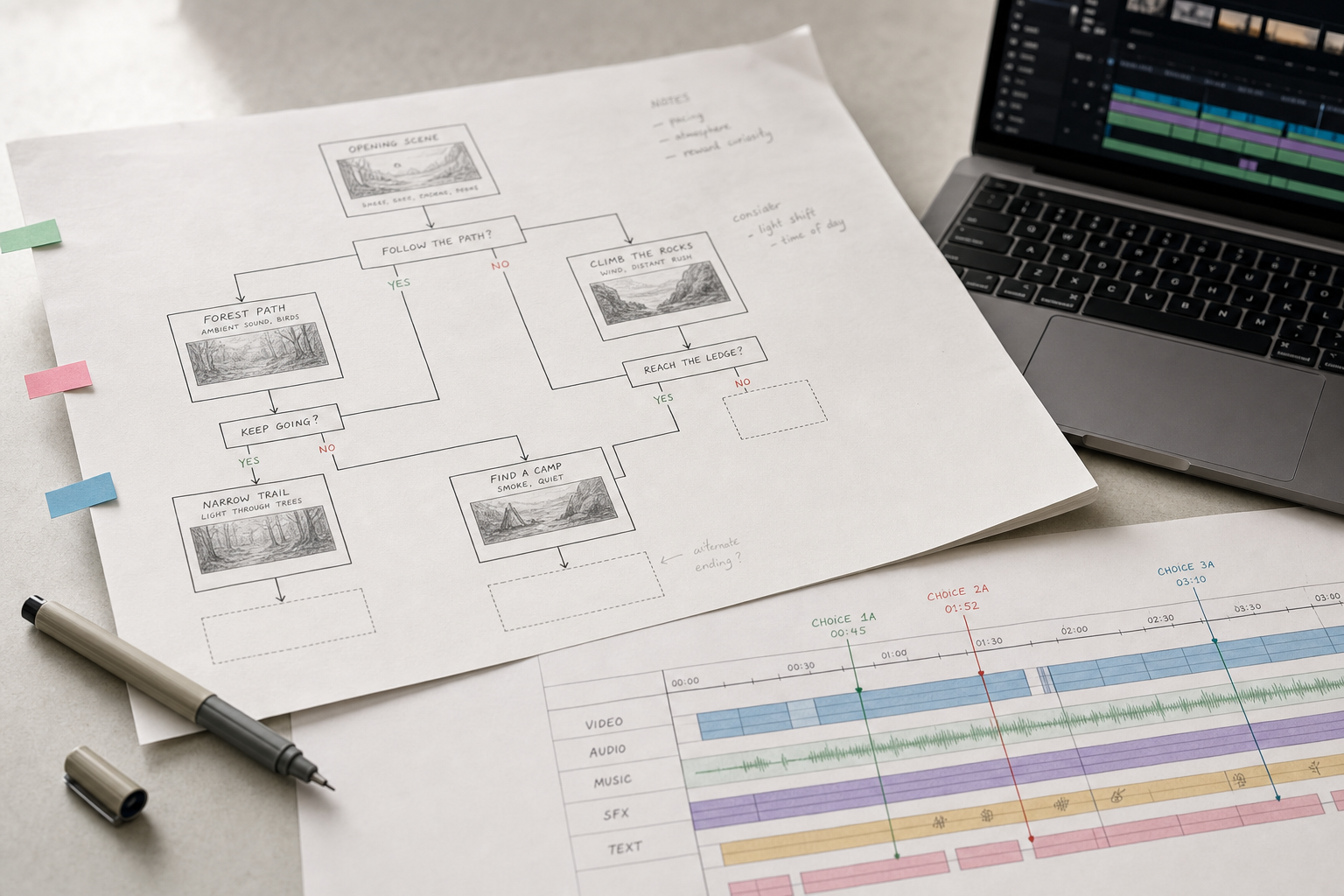
Choices are planned around useful information routes, not novelty for its own sake.
Question-led engagement
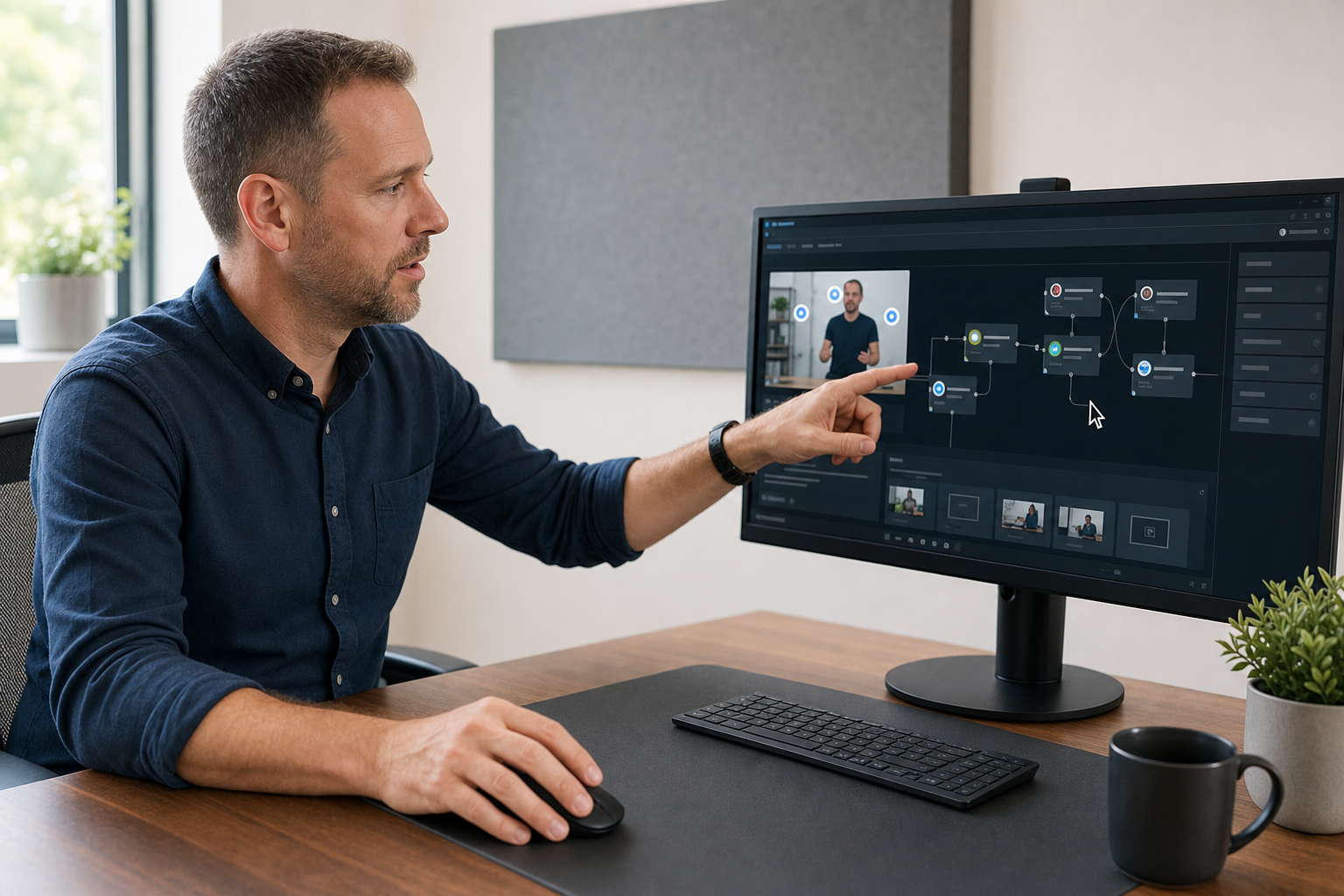
The presenter can pause, take a question and guide the viewer back into play.
Clear return to the main flow
We plan how each branch reconnects so the experience still feels organised.
Give viewers a more active role in the content
Some messages work better when viewers can move through them by choice rather than sit through one fixed sequence. Interactive videos make that possible by adding decision points, selectable paths or responsive elements inside the viewing experience. One useful format is presenter-led question and answer, where the viewer clicks, asks a question, receives a response and then continues with the main video. When you shape the brief with us at Visibility Consulting uk, we focus on where interaction will genuinely help the viewer, rather than adding it simply because it sounds new.
Interaction needs careful planning to stay clear
Branching content only works when the route back into the main explanation is well organised. With Visibility Consulting uk, we plan the viewer journey, decision points, response material and re-entry to the core video before production starts. That makes this format useful for guided explanations, customer education, presentations and more personalised information journeys where different viewers need different detail. The aim is to increase participation and relevance, not create a clever system that leaves people uncertain about what to do next.
Frequently asked questions
How does the question-and-answer format work?
The viewer can interact through the presenter, pause the main video, submit a question, receive a reply and then continue watching. That makes the content feel more responsive while still keeping a structured route through the wider message. We plan those pauses and responses before production starts.
What types of project suit interactive videos?
They can work well for guided explanations, customer education, presentations and information journeys where viewers may need different levels of detail. If the audience benefits from choosing what to explore next, interaction can make the experience more relevant than a single linear sequence.
Does interactive video need more planning than a standard film?
Yes, because the branching structure, decision points and response content all need organising in advance. We map the viewer route, how each interaction behaves and how people return to the main video, so the finished piece remains clear and manageable rather than becoming a confusing set of loose options.